An acquired brain injury (ABI) can affect almost every part of life – movement, balance, fatigue, speech, memory, judgement, personality, and emotional regulation. Recovery is rarely linear. For many people, what makes the difference is not simply “having therapy”, but being in the right rehabilitation pathway with the right clinical capability, structure, and support.
If you’re searching for brain injury rehabilitation, you may be trying to understand:
- what a specialist brain injury rehabilitation programme includes
- whether inpatient rehabilitation is appropriate
- what “neurobehavioural” support means
- what good looks like in a rehabilitation centre
- how to progress safely after hospital discharge
This guide explains the key components of brain injury rehabilitation and what to look for when choosing a service.
What is brain injury rehabilitation?
Brain injury rehabilitation is a structured programme designed to help a person:
- regain physical function where possible
- rebuild daily living skills
- manage cognitive and behavioural changes
- reduce risk and incidents
- improve independence and quality of life
- develop a realistic long-term plan (home, supported living, longer-term care, or ongoing rehabilitation)
Brain injury rehabilitation is often delivered by a multi-disciplinary team (MDT) and should be goal-led, measurable, and adapted as needs change.
Who is brain injury rehabilitation for?
Brain injury rehabilitation can support individuals with:
- acquired brain injury (ABI) (including traumatic brain injury)
- injuries linked to falls, road traffic incidents, assault, or workplace accidents
- hypoxic injury, tumour, encephalitis, or other neurological events that impact function
- complex presentations involving cognition, behaviour, emotional adjustment, and physical disability
- longer-term rehabilitation needs where progress is gradual
The key question is not only the cause of injury, but the impact on function and the level of support required to progress safely.
Why the setting matters after brain injury
A common challenge after hospital discharge is the gap between being medically stable and being ready to return home. Brain injury recovery often requires a structured setting that can deliver therapy, manage risk, and provide consistency.
The right setting can help prevent:
- deterioration and deconditioning
- avoidable incidents (falls, impulsivity, unsafe decision-making)
- stalled progress due to lack of structure or specialist input
- prolonged placements driven by uncertainty, rather than clear pathway planning
A specialist neuro rehabilitation programme creates the conditions for safe progress – particularly when the person’s needs are complex.
What does a good brain injury rehabilitation programme include?
A high-quality brain injury rehabilitation programme typically includes:
1) A clear rehabilitation plan with meaningful goals
Goals should focus on real-life capability, such as:
- safe mobility and transfers
- improved balance and endurance
- independence in personal care and daily routines
- communication and cognitive strategies
- fatigue management and pacing
- risk reduction and safety awareness
- community access and confidence-building (where appropriate)
Progress should be reviewed regularly, and goals should evolve as the person’s needs change.
2) A multi-disciplinary team (MDT) approach
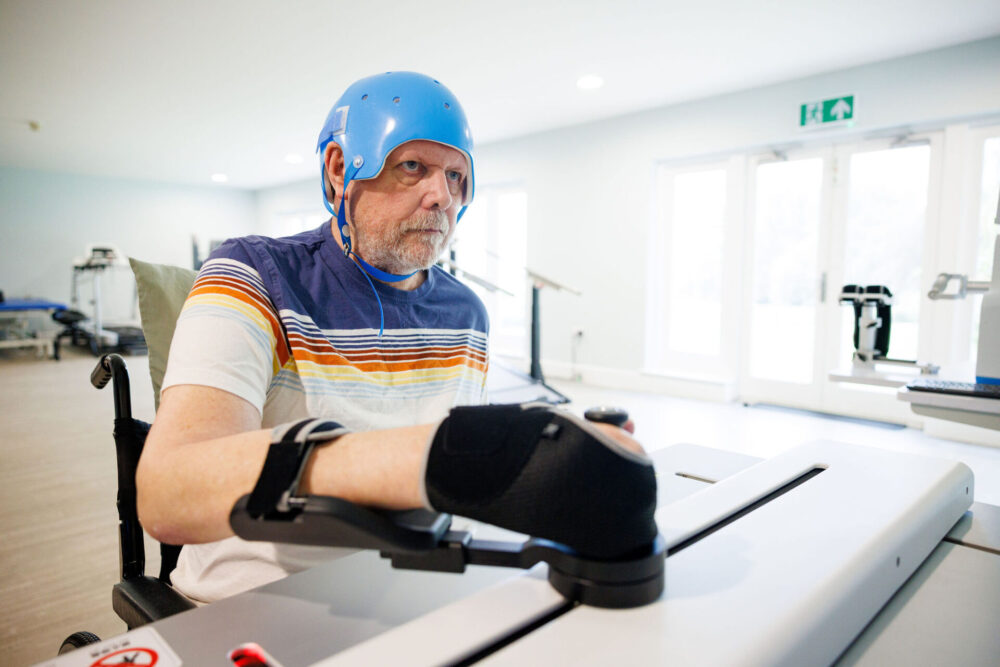
Brain injury often affects multiple domains at once. A good programme brings therapies together, typically including:
- physiotherapy
- occupational therapy
- speech and language therapy (where needed)
- psychological support (to address cognition, mood, adjustment and behaviour)
- skilled nursing and care support
- clinical leadership to coordinate complex needs and maintain therapeutic direction
This MDT approach is what turns “care + therapy” into a structured rehabilitation pathway.
3) Neurobehavioural support where it’s needed
Many people with ABI experience behavioural or emotional changes. This might include impulsivity, disinhibition, low frustration tolerance, agitation, or reduced insight. These challenges can block progress if they aren’t addressed properly.
Neurobehavioural rehabilitation should involve:
- structured approaches to risk and triggers
- consistent routines and staff responses
- clear communication and boundaries
- psychological support and strategies that improve engagement
- a plan that enables progress without escalating incidents
The right environment and consistency can be as important as the therapy programme itself.
4) Slow stream rehabilitation where progress is gradual
Not all recovery is fast. Some people benefit from slow stream rehabilitation, where the programme is designed around:
- repetition and consistency
- paced goal progression
- gradual tolerance-building
- small functional gains that accumulate into meaningful change
For referrers and families, slow stream rehabilitation is not a “lesser” pathway – it is often the most appropriate way to unlock progress in complex presentations.
5) A clear transition plan from day one
A strong rehabilitation programme includes discharge planning as a core feature, not an afterthought. This means:
- clear “next step” options
- realistic planning based on progress and risk
- involvement of family and stakeholders in decision-making
- coordination with local services where transition is viable
Inpatient brain injury rehabilitation: when is it appropriate?
Inpatient rehabilitation may be appropriate when a person:
- requires a structured environment to reduce risk and stabilise routine
- needs coordinated therapy and support that can’t be delivered safely at home
- has complex mobility needs requiring skilled handling
- has cognitive or behavioural risks that require specialist oversight
- benefits from a consistent programme delivered every day
The most important factor is suitability: matching the setting to the person’s needs, goals and risk profile.
What to include in a brain injury rehab referral
To help a service assess suitability quickly, include:
- diagnosis and key history (including dates and acute pathway)
- functional baseline (mobility, transfers, self-care)
- cognition and communication summary
- behavioural presentation and risk summary (including triggers and incidents)
- safeguarding considerations
- current therapy input and progress to date
- medical needs that impact rehabilitation (fatigue, pain, nutrition, skin integrity)
- desired outcomes and what “success” looks like in practical terms
Common questions about brain injury rehabilitation
How long does brain injury rehabilitation take?
There is no single timeframe. Some people progress quickly; others require longer-term rehabilitation. What matters is having a structured, measurable programme matched to the person’s needs.
Is specialist neuro rehabilitation different from general rehabilitation?
Yes. Specialist neuro rehabilitation is designed for neurological complexity, including physical, cognitive and behavioural needs, supported by MDT coordination and clinical governance.
What outcomes should we expect?
A good programme should be able to explain how it measures progress and how it supports transition planning. Outcomes may include improved independence, reduced risk, improved engagement, and clearer next-step planning.
Next step: discuss brain injury rehabilitation pathways
If you’re exploring brain injury rehabilitation and want to understand the most appropriate pathway, the next step is to share the person’s current needs, risks and rehabilitation goals so suitability can be assessed.
Get in touch with our referrals team today to discuss further.