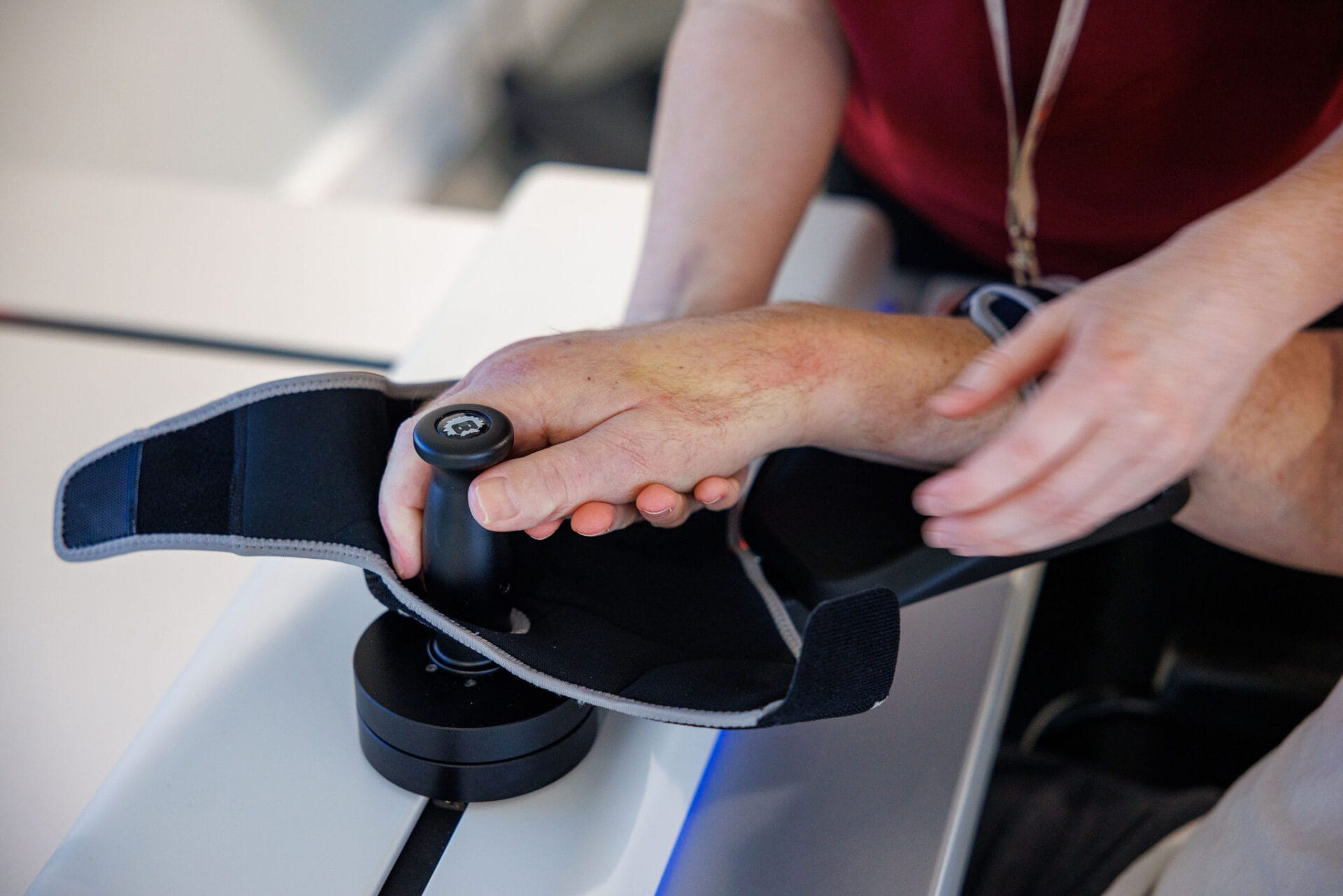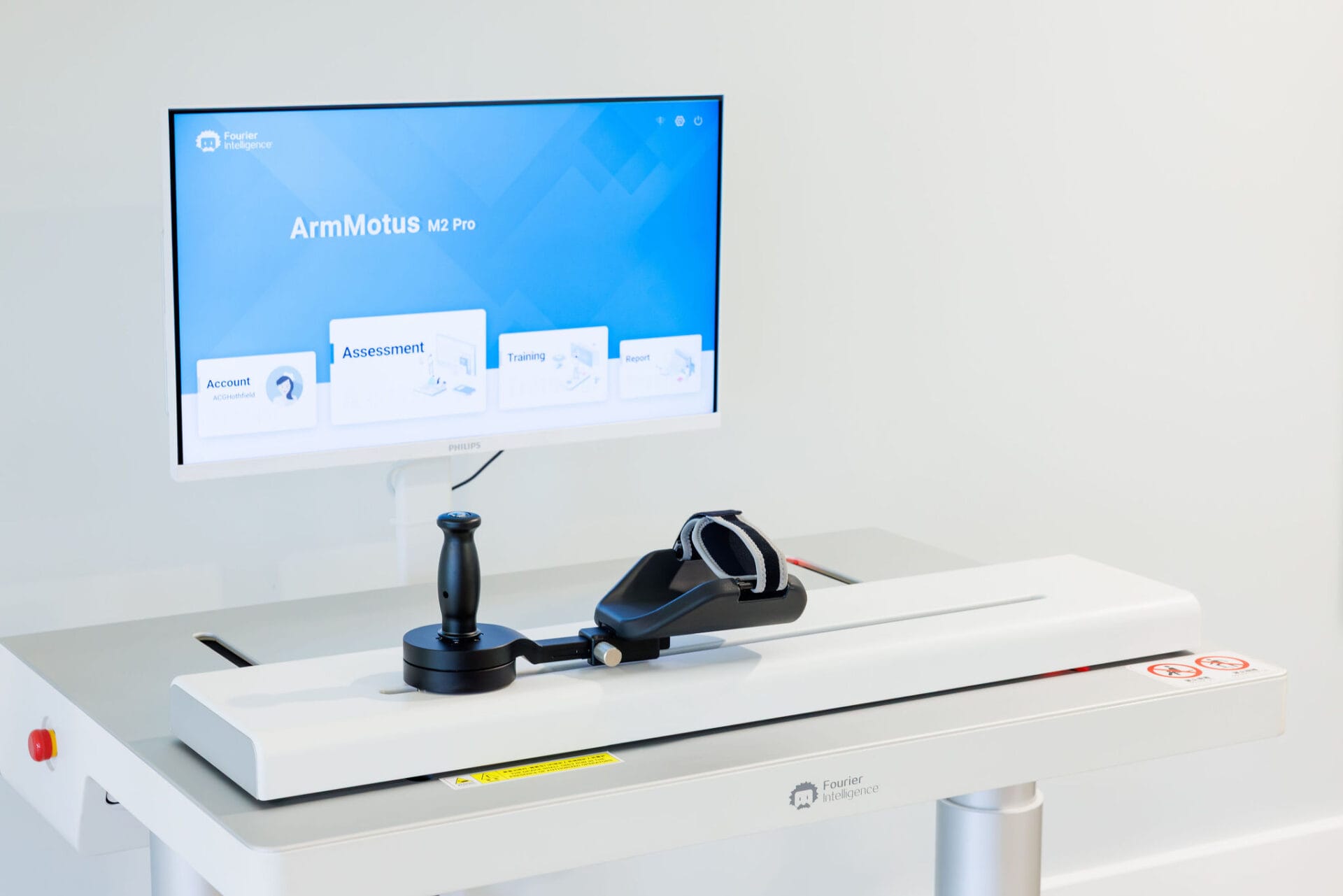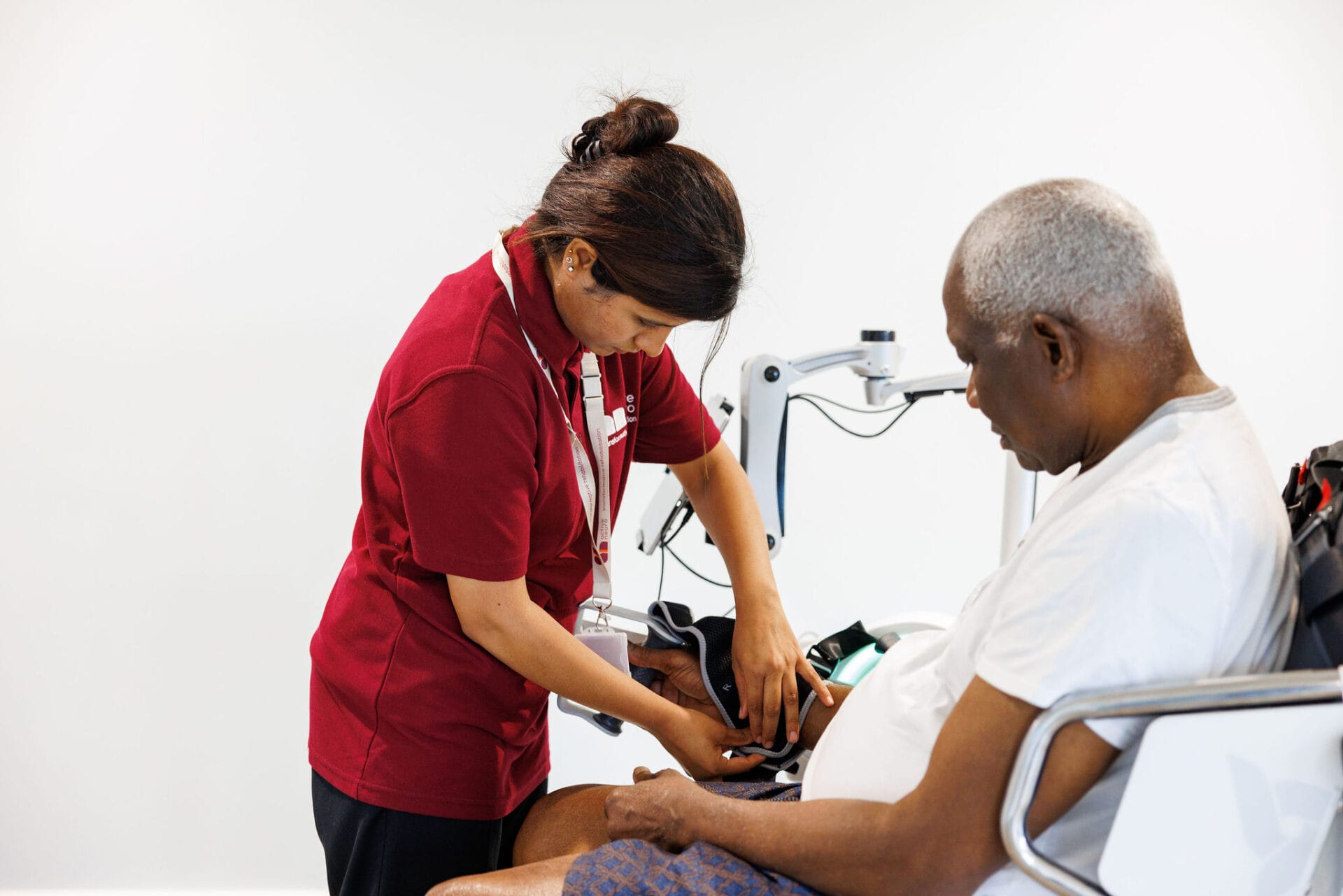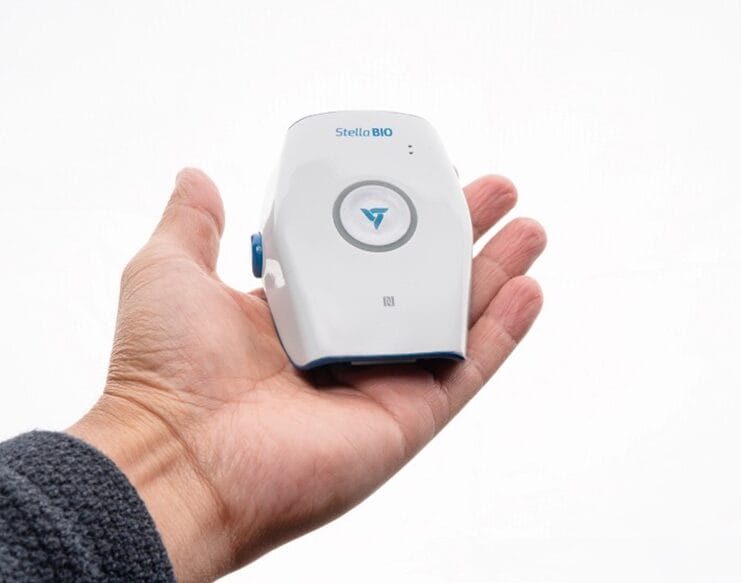
ArmMotus M2 Pro
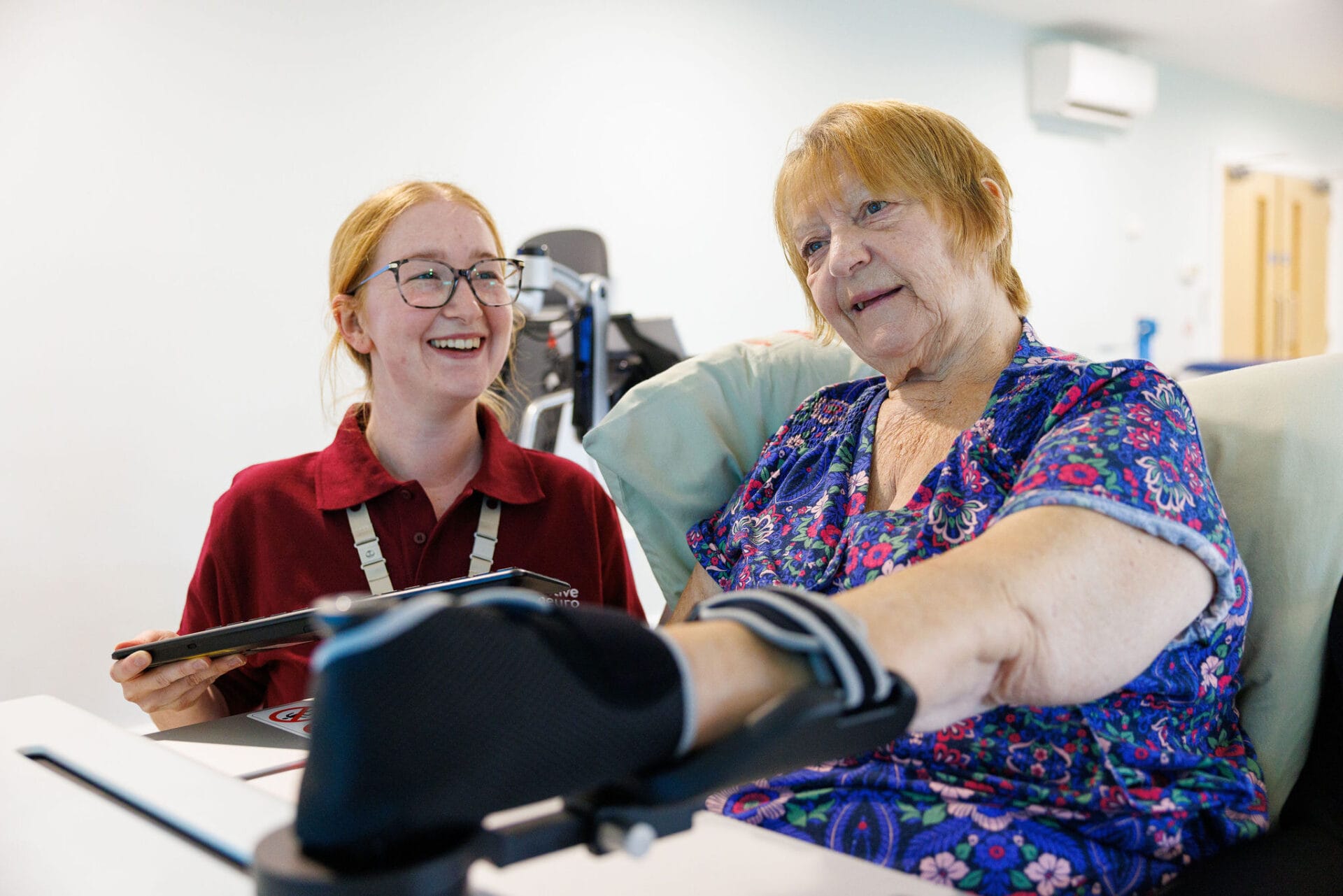
Supports arm strength and movement through game-based tasks, with the level of challenge adjusted as you progress. Often used by people recovering from stroke or spinal cord injury.
Whether someone is at the beginning of their rehabilitation journey or working towards greater independence, returning home or regaining specific functional abilities, we shape rehabilitation around the individual and adapt it as their needs change.
By combining clinical expertise in person-led therapeutic interventions with smart, data-rich, rehabilitation technology, we deliver more personalised, measurable and effective rehabilitation, helping people regain movement, strength and independence.
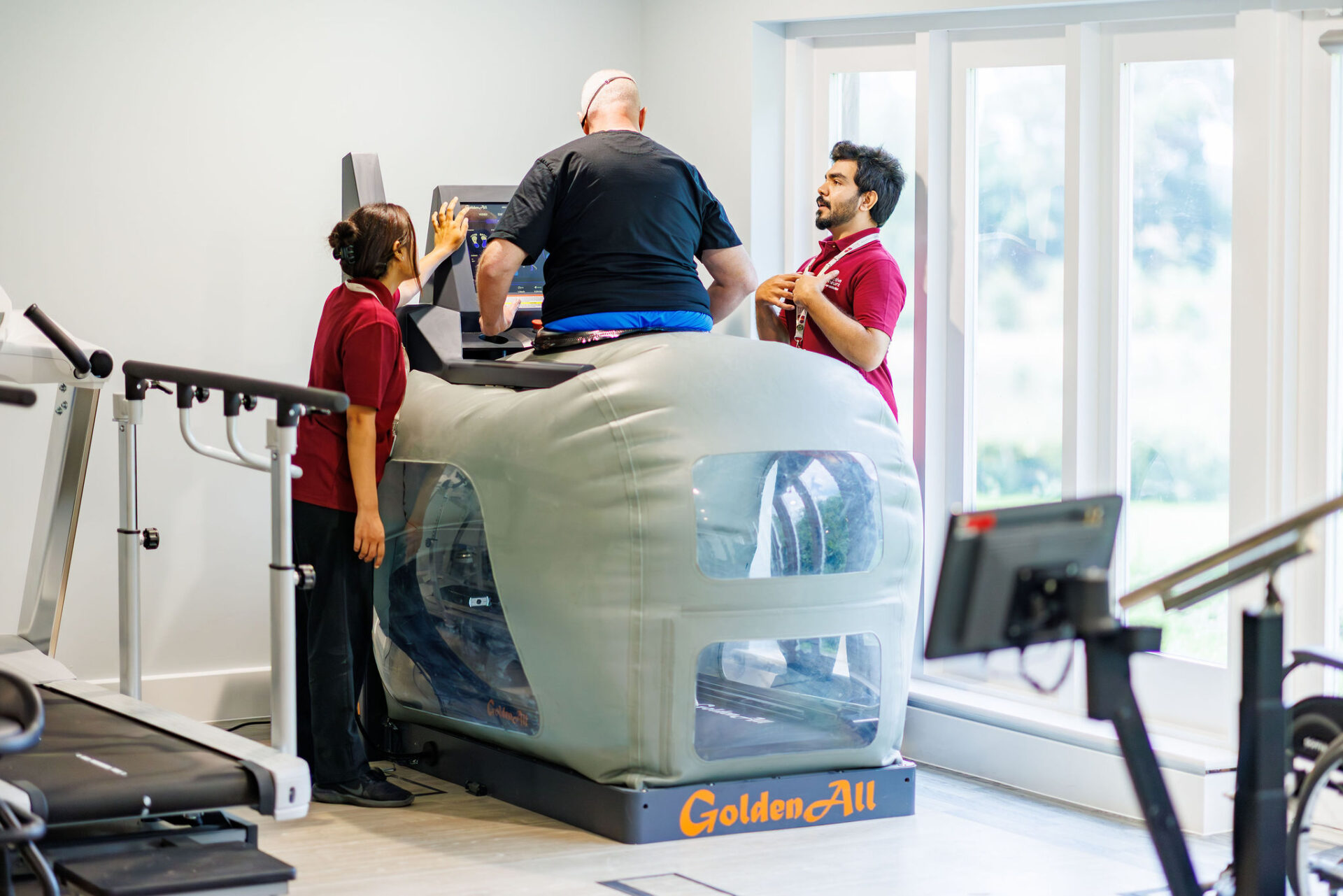
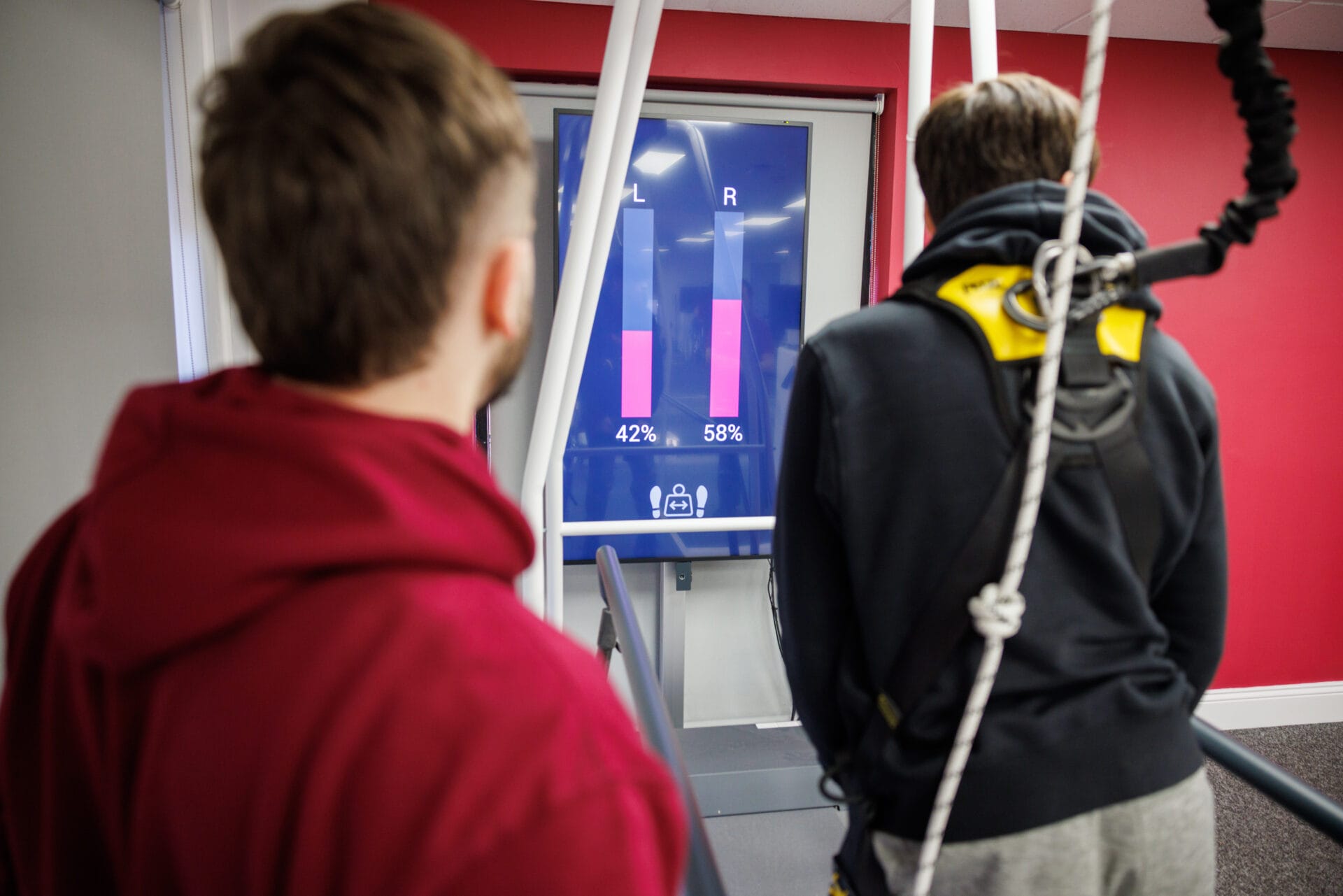
Technology is integrated throughout our rehabilitation programmes to enhance, rather than replace, hands-on therapy. From robotics and sensor-based rehabilitation to augmented and virtual reality, our technologies enable people to practise movements more intensively and repeatedly, tackle real-world tasks in safe environments, and receive immediate feedback on their performance. Many also capture objective data, helping our clinical teams measure progress and continually adapt rehabilitation as a person’s abilities and goals change.
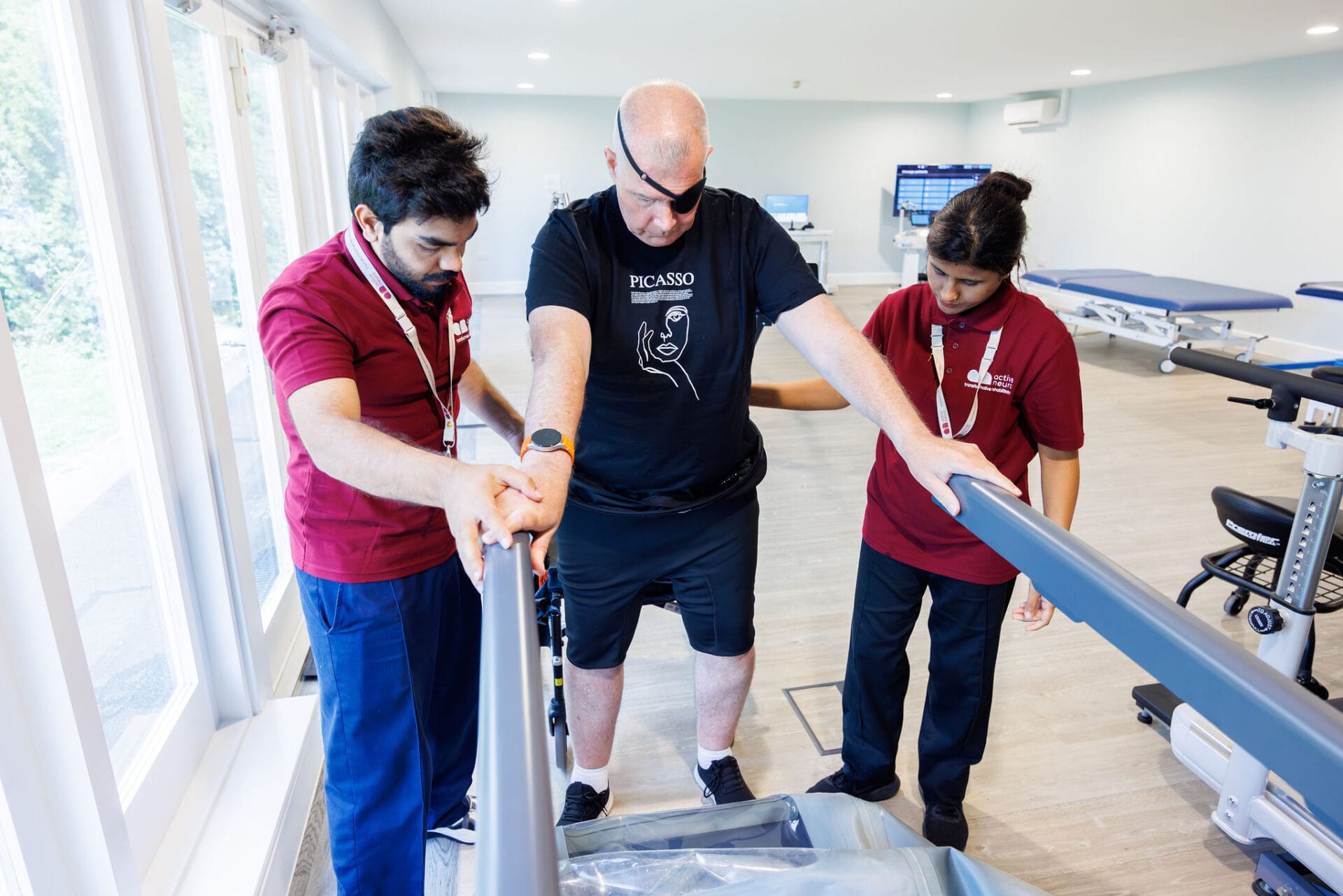
Technology is never the whole day. A programme mixes one to one sessions, group therapy and hands-on treatment, and this person-centred approach helps people build confidence and work towards the outcomes that matter most to them.
The first Super Inductive System DUO in the country, and the first independent provider to bring it into neurorehabilitation.
A high-intensity electromagnetic field triggers gentle muscle contractions deep within the body, reducing pain, easing stiffness and restoring joint movement where hands-on therapy alone cannot reach.
Read about the SIS DUO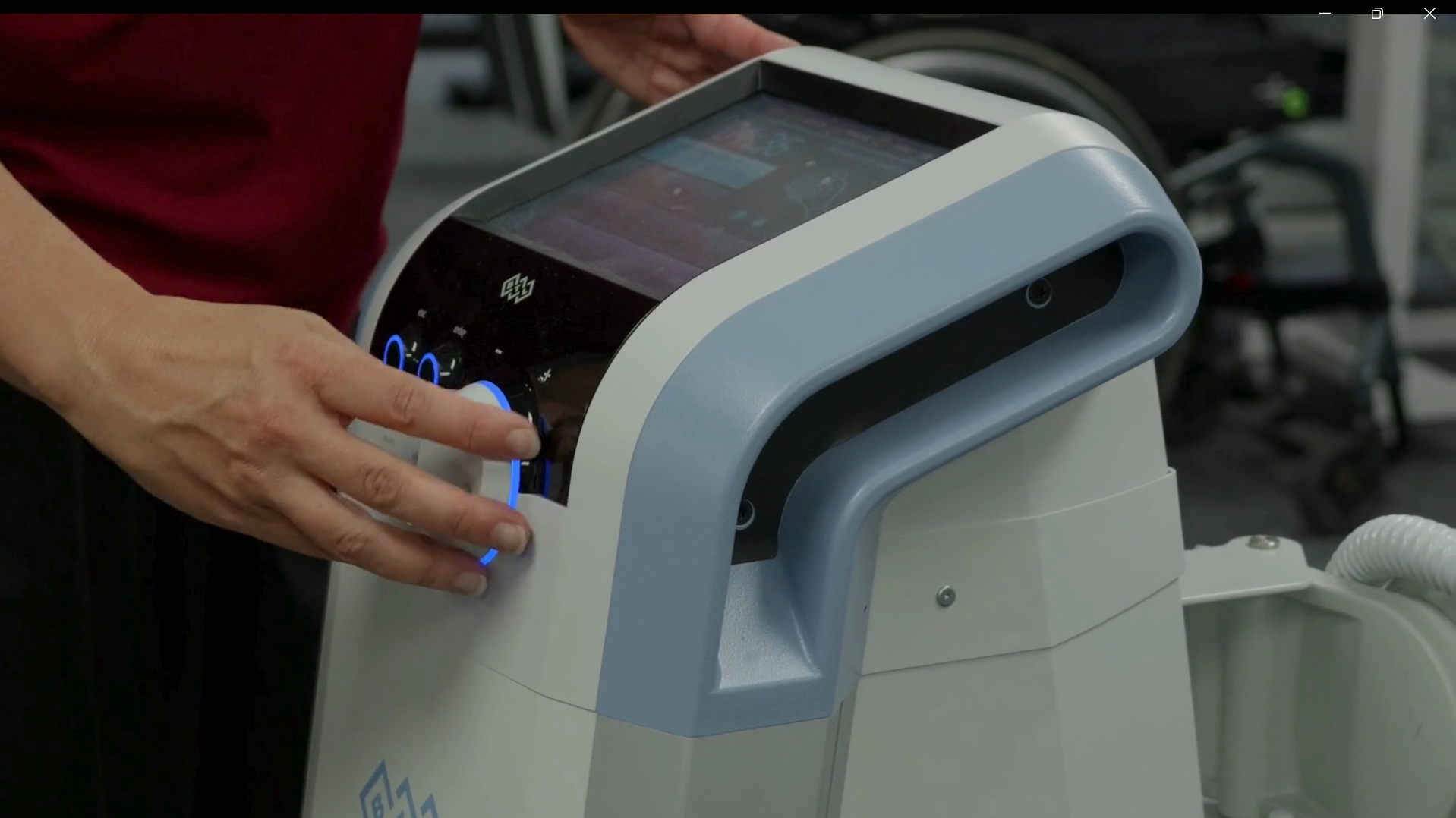
This is what rehabilitation looks like when nothing is held back. Robotics that support a limb through movement it cannot yet make alone, sensors that read muscle signals too faint to see, electromagnetic stimulation that reaches deeper than hands can, and augmented reality that turns a room into practice for real life. Some of it is the first of its kind in the country. All of it sits alongside hands-on therapy, and every session is measured.
In the room
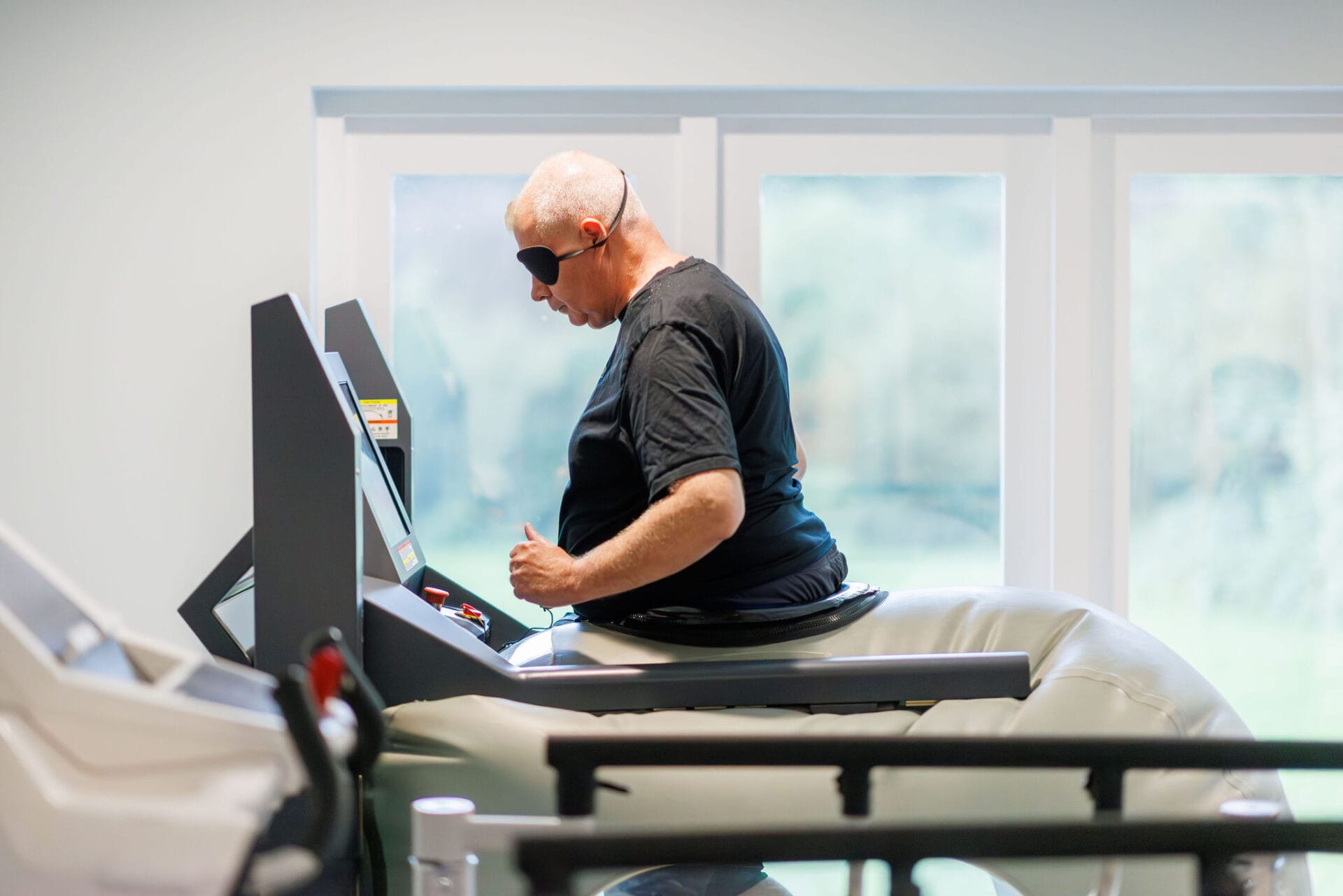
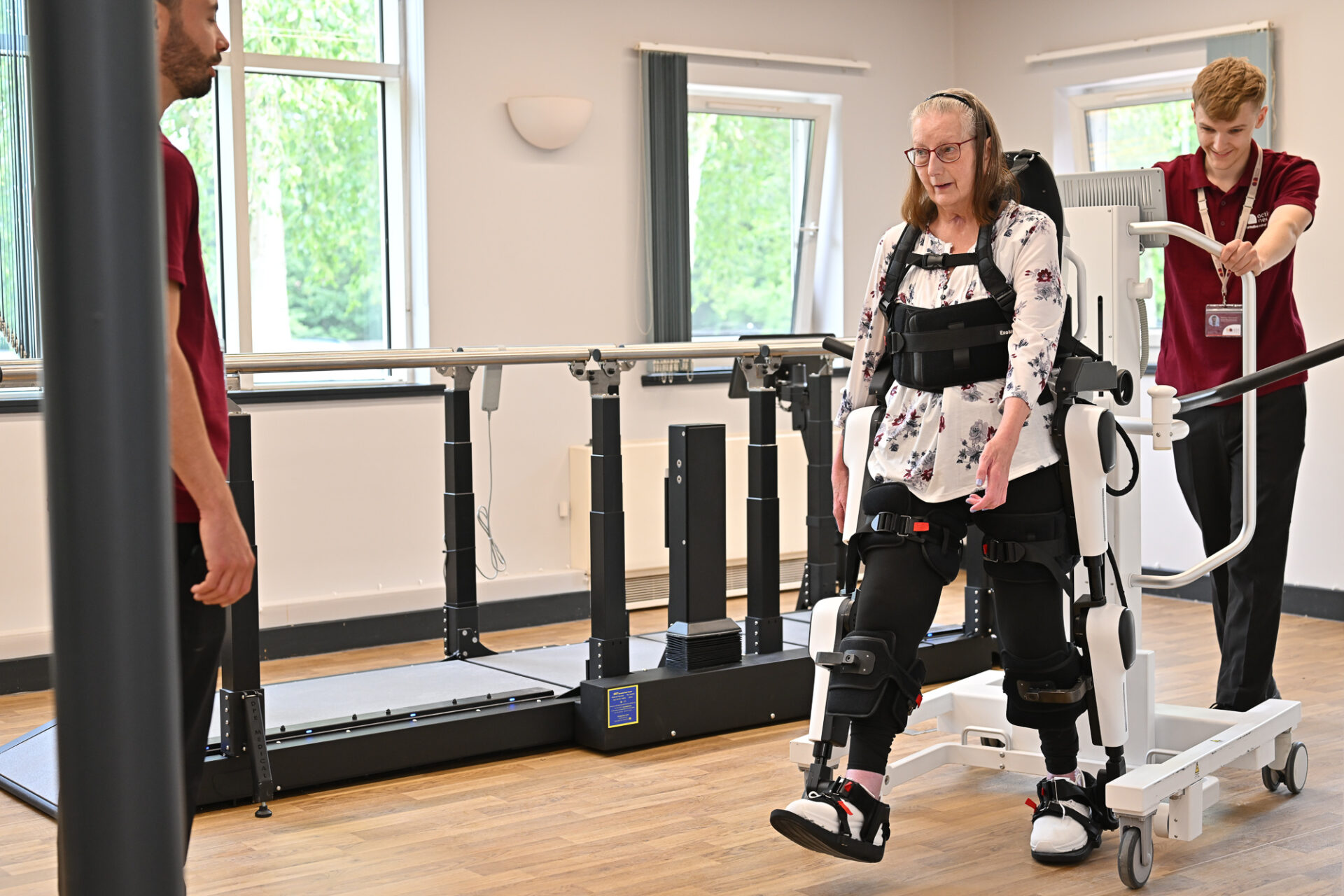
A robotic exoskeleton that takes the weight of standing so the work can go into stepping, balance and strength, with the therapy team setting the level of support session by session.
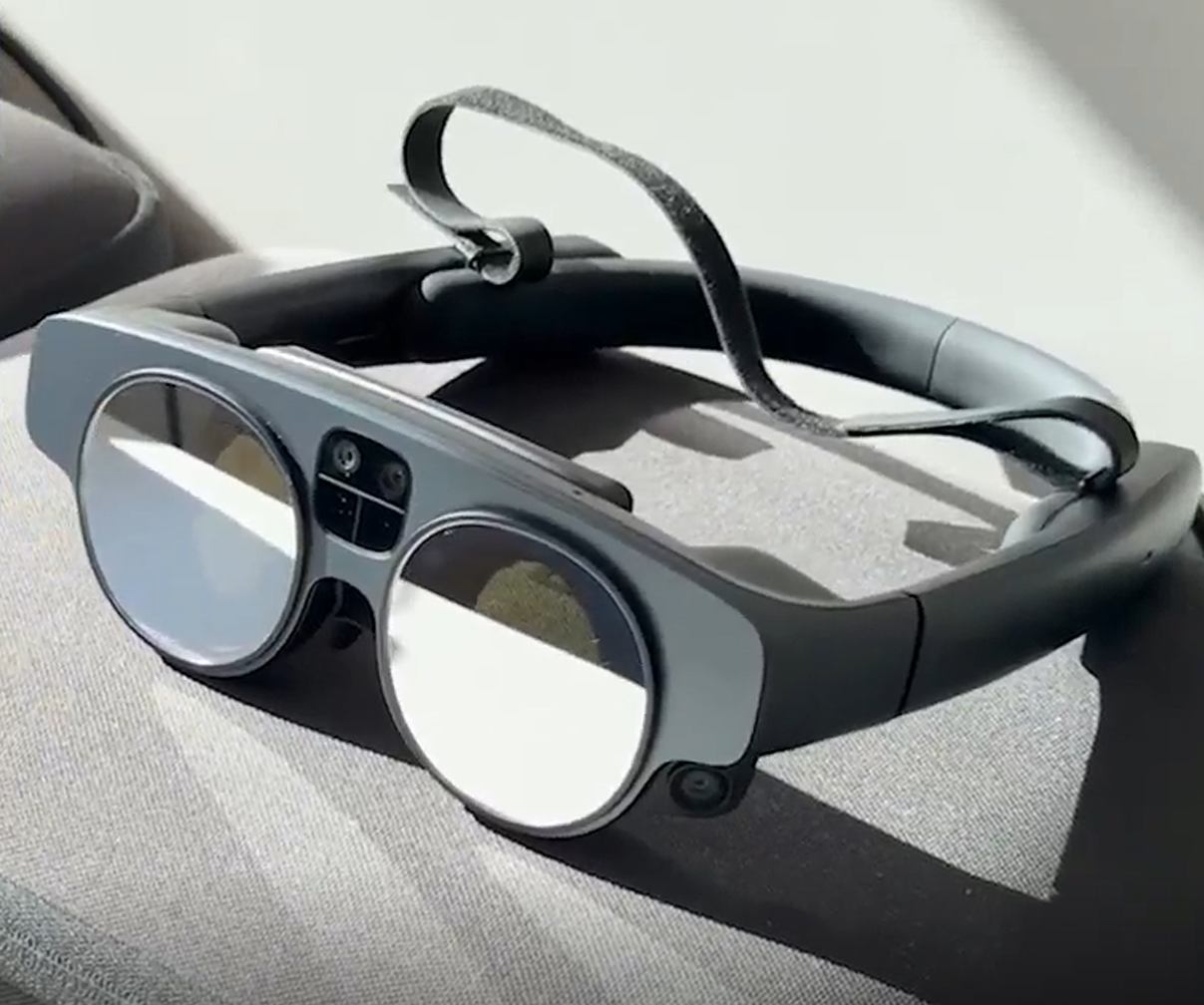
See the standing and walking systemsStrolll uses augmented reality to bring therapy into real-world settings. Wearing a lightweight headset, you see visual cues and interactive games layered onto the room around you, guiding movements like stepping, turning and balance work. Because the practice happens in the environment you are actually in, the gains translate directly into everyday life.
Strolll is available at selected centres, and because the headset works in ordinary spaces, a session can take place in a corridor, a garden or a day room rather than only in a therapy gym. Practising in the places where movement is actually difficult means confidence builds alongside the physical gains, and each session records what was completed so progress can be reviewed with a therapist.
Advanced technology earns its place by producing evidence. Every person we support is assessed using standard outcome measures at admission, at review and at discharge, so progress is recorded as a number and compared fairly across our services.
Service-wide figures: 64 discharged stays across all Active Neuro centres, April to September 2026.
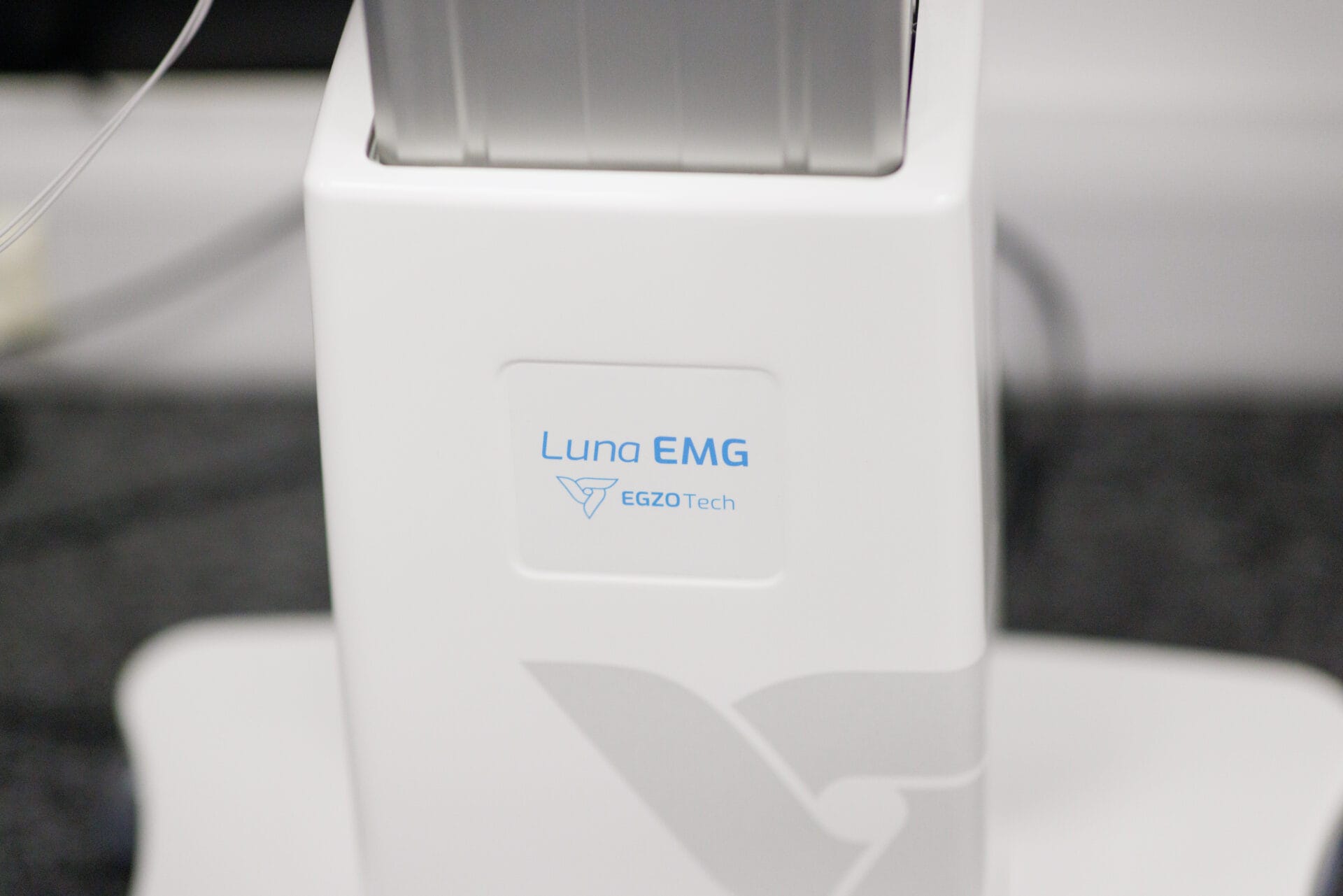
Nick came to Active Neuro after a brain haemorrhage. He used the ArmMotus M2 Pro and Luna EMG to improve movement, strength and muscle control in his left arm.
Walking distance went from six metres with two people, to 50 metres with distant supervision only.
Read the full story“Working with the therapists has given me independence and a much brighter outlook to my future living with this injury.”
Following a road traffic accident and subsequent spinal cord injury, Ele originally required a wheelchair to mobilise, and crutches for shorter distances.
Used as a standing tool alongside stepping and walking, the ExoMotus M4 stabilises her legs and holds her upright, letting her work on upper limb and core strength while standing. She can now mobilise independently over short distances.
One of her goals was to hold her granddaughter’s hand and walk alongside her in public, and to attend her son’s outdoor sporting events. She has since walked and watched her son compete in his athletics competitions.
Read the full storyClient story
Following a spinal cord injury, Tony went from needing a wheelchair to standing and walking again. In the film he talks about what that progress has meant to him, and the part the technology played in getting there.
What the technology changes for the clinicians who use it every day.
SIS DUO
“It reaches muscle we simply cannot activate by hand. For clients whose pain or tone was blocking progress, it opens a window where the rest of the therapy can start working.”
Highly Specialist Physiotherapist
Hothfield, Ashford
ExoMotus M4
“Standing changes the whole session. Once someone is upright and supported, we can work on balance, core strength and stepping in a way that simply is not possible seated.”
Clinical Lead Physiotherapist
Hunters Moor, Birmingham
Luna EMG
“It shows us exactly how much of a movement is the client and how much is the machine. That measurement is what lets us set the next goal honestly.”
Specialist Occupational Therapist
Kibblesworth, Gateshead
Whether you are a family member, a case manager or a discharge team, one of our enquiries team will call within one working day. Everything you share is handled in confidence.